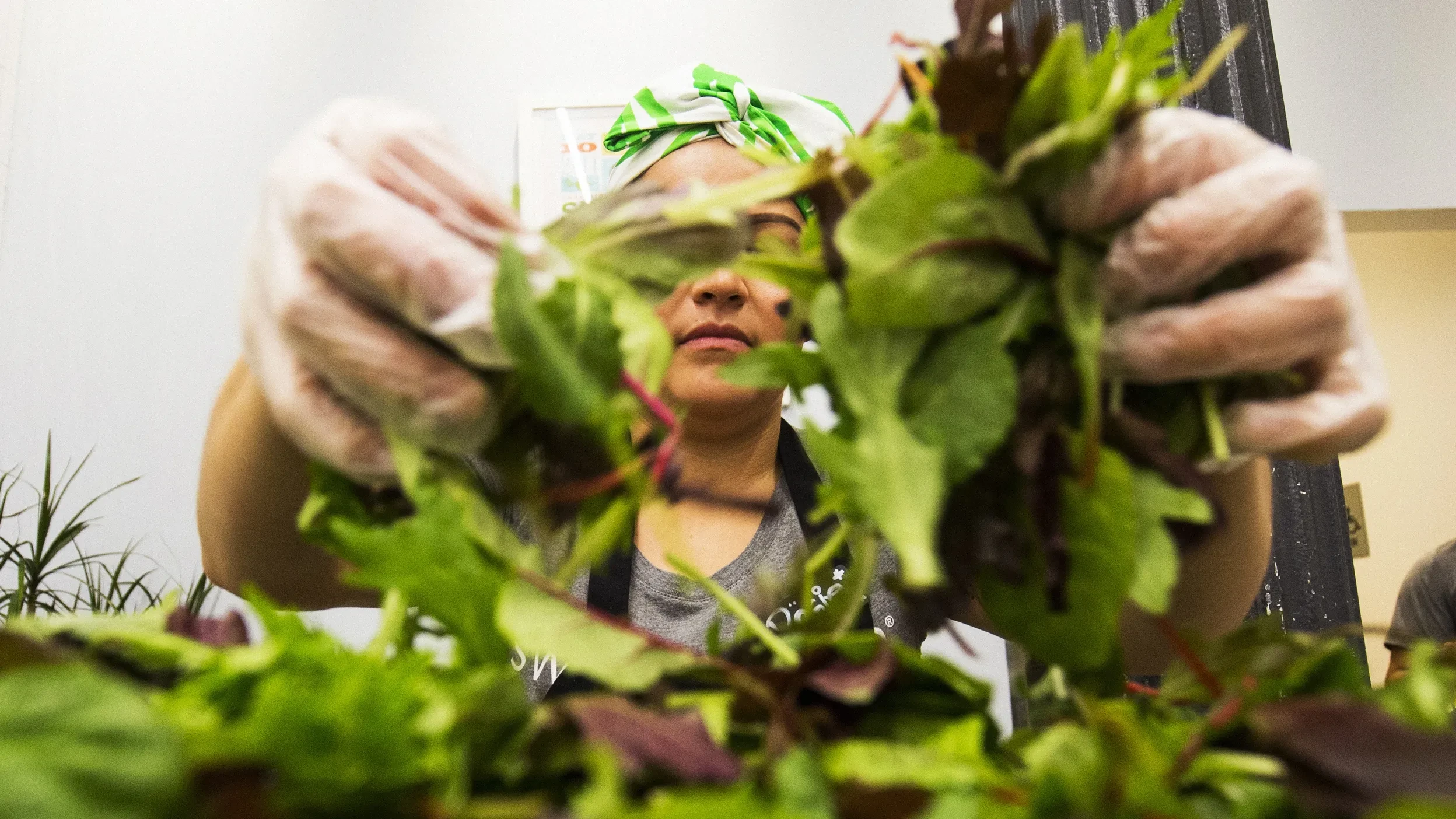
The Cyclospora Outbreak’s Lettuce Panic Is Tanking Foot Traffic at U.S. Salad Chains
Widespread anxiety over the risk of painful, explosive gastrointestinal illness from the cyclospora parasite is driving customers away from salad-focused eateries in business districts and suburban strip malls across the United States.
Location analytics data from Placer.ai shows that on Saturday, July 11, 2026, as headlines broke around a massive multi-state cyclospora outbreak widely suspected to be tied to contaminated leaf lettuce, foot traffic at popular salad chain Chopt dropped 7.1% compared to the brand’s average Saturday visitor volume for that year to date. The same day, Panera Bread logged a 7.4% dip in weekend foot traffic against its typical Saturday baseline, and Sweetgreen saw a 3.1% decline. Though Placer.ai told WIRED that it only has a small window of recent days of data to reference for the trend, the firm confirms the drop-off in visitors to "lettuce-heavy menu" restaurants first began around July 10.
Industry aggregated metrics highlight a clear shift in consumer behavior: shoppers are actively ditching chains centered on fresh raw salads, while traffic to classic fast food staples that rarely feature large portions of raw leafy greens — including McDonald’s, Chick-fil-A, and Wendy’s — rose 0.8% compared to their average Saturday volumes. Across the entire fast-casual segment, which offers far more fresh raw produce than traditional fast food competitors, overall foot traffic fell 2.4% that same weekend.
Crucially, none of these popular salad-focused chains have been formally linked to the ongoing outbreak, which the latest U.S. Centers for Disease Control and Prevention estimates has sickened nearly 7,000 people to date. Federal health investigators have not yet named any specific ingredient, grower, or produce supplier as the confirmed root cause, though the Michigan Department of Health and Human Services — the state at the epicenter of the outbreak — has flagged leaf lettuce and raw salad greens as a "potential source." Past cyclospora outbreaks have repeatedly been tied to raw uncooked produce including fresh herbs, raspberries, and leaf lettuce, as the high heat required to kill the resilient parasite is almost never applied to berries or pre-washed greens marketed for raw consumption.
The widespread panic over the parasite-driven gastrointestinal distress has also spooked Wall Street investors. As of press time, publicly traded Sweetgreen’s share price had dropped 23.3% over the preceding five trading days. (Chopt and Panera Bread are privately held companies with no public stock listing.) None of the "lettuce-heavy" chains responded to WIRED’s requests for comment on the outbreak-related concerns.
While Sweetgreen’s stock takes heavy losses, the only major national restaurant brand with confirmed suspected ties to the outbreak is Taco Bell. Multiple locations in the greater Detroit region posted public notices stating they were "currently unable to sell lettuce, cilantro, onion, pico de gallo, and guacamole due to a nationwide recall," and The Washington Post has reported that health officials are actively investigating whether the chain’s supply chain played a role in the spread of the parasite. Shares of Taco Bell’s parent company Yum Brands have fallen 7.2% in the past five days. Placer.ai data shows Taco Bell’s national foot traffic dropped 5.8% on July 11 compared to its average Saturday baseline, while in Michigan — where confirmed case counts have hit 4,312 — local weekend foot traffic plummeted 11.5% against typical Saturday volumes. Viral social media discourse about the risks of contracting the cyclospora parasite is expected to keep even more regular Taco Bell customers away in the near term.
Still, not all consumers are wary of leafy greens. Two diners exiting a Sweetgreen location in Manhattan’s Financial District told WIRED on a recent Thursday that they had not even heard of the ongoing cyclospora outbreak. New York State has far lower cumulative case counts than Michigan, logging 510 total confirmed cases in 2026 to date, though more than 380 of those cases are in New York City alone — a threefold jump over the number of cases recorded at the same point last year, per local health department data. A few blocks away at a Chopt location, first-time customer Victoria Atweh said she had only positive feedback for the salad chain, and that she had not thought about the cyclospora outbreak at all before placing her order.
Editor’s Update, 7/17/2026, 11:30 AM EDT: This article has been updated to correct an earlier misstatement that misidentified July 11 as June 11.
Cyclospora Outbreak Fears Push Sharp Foot Traffic and Stock Drops for Salad-Focused U.S. Restaurants