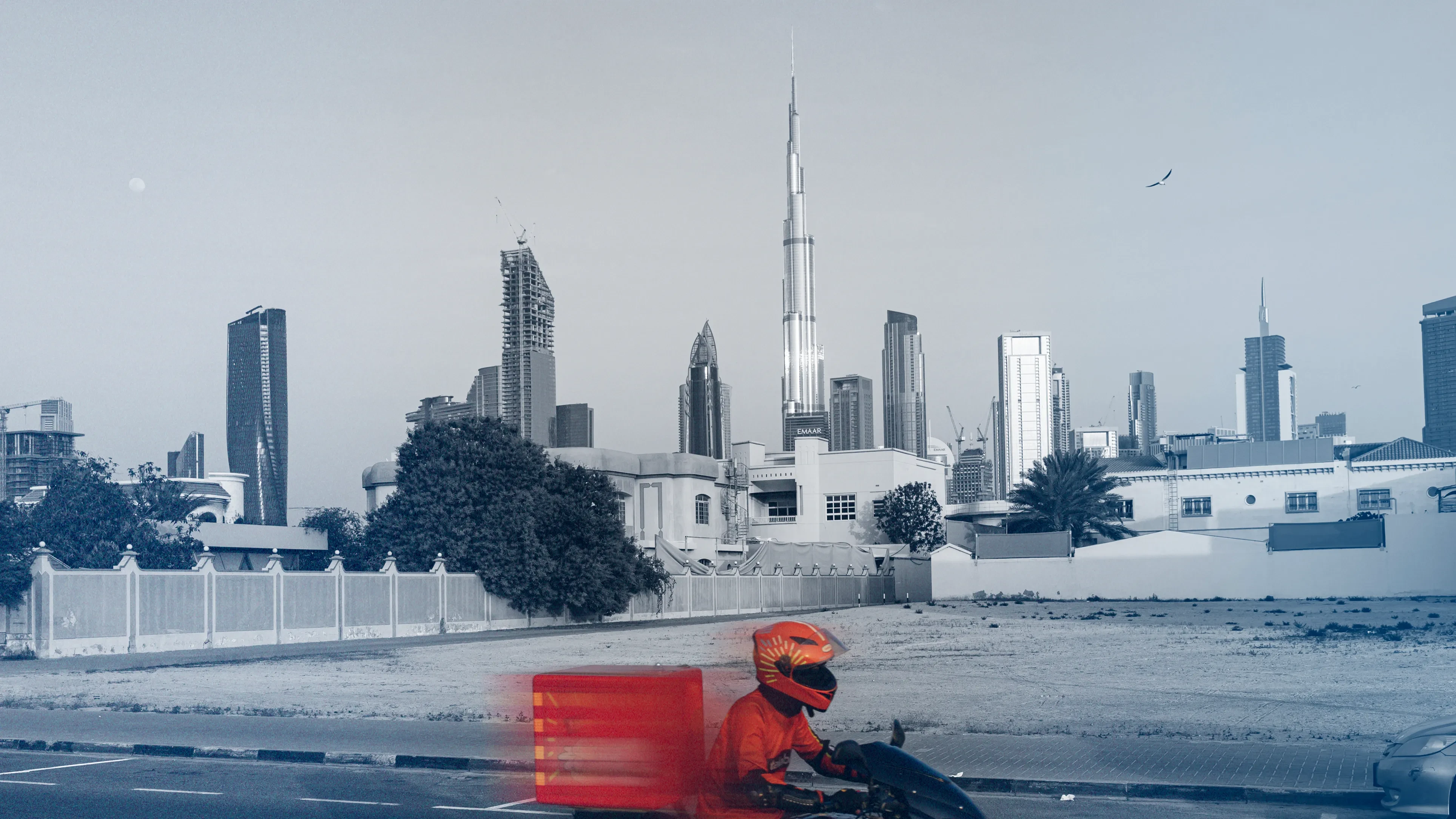
Amid ongoing conflict across the Gulf region—marked by flight delays, active missile alerts, and the roar of interception operations overhead—third-party delivery platforms including Careem have largely kept their services running. Deliveries are slower than usual, service is paused in high-risk areas, and routes are rerouted constantly to avoid danger, but the apps have not fully shut down operations. Many major platforms did experience brief outages across the United Arab Emirates (UAE) on the Saturday immediately after the first wave of attacks, but services were restored online quickly.
Companies say their top priority is ensuring residents retain access to critical essentials, while helping communities maintain as much a sense of normalcy as possible. In an official statement shared with WIRED Middle East, Careem confirmed it conducts “real-time, area-by-area safety assessments of all our operating zones”, and shares instant safety updates and guidance with its drivers (whom the company calls captains) via WhatsApp groups and SMS. “We have made clear to all our partners that captains are under no obligation to stay logged into the app if they have any safety concerns about working”, the statement added.
The UAE’s Ministry of Human Resources and Emiratisation has advised private sector firms to implement remote working from March 1 to 3, with exceptions only for essential roles that require in-person presence. A spokesperson for Uber confirmed the company’s ride-hailing services are fully operational across the region. “The safety and well-being of our riders and partner drivers is our core priority; we are monitoring the situation in real time and will continue to operate in strict alignment with all local government recommendations”, Uber’s statement to WIRED Middle East read. Every delivery platform that released a statement echoed this stance. Deliveroo noted it operates “in line with official government guidance and based on continuous safety assessments”.
Still, the decision to keep services running has sparked heated public debate online, centered on the risk faced by frontline workers.
Drivers at Risk
Critics argue delivery riders are being put in unnecessary danger. Even when most incoming missiles are shot down by interception systems, falling debris and unexpected road hazards from interceptions still pose major threats to people working on the road. Since attacks began on February 28, the UAE Ministry of Defense has recorded 3 deaths and 58 injuries across the country.
Other observers note that fewer customer orders means drivers must spend more time out in dangerous conditions searching for work to hit their daily earning quotas. One anonymous driver for major platform Deliveroo, who works for a third-party logistics agency that supplies workers to Deliveroo, explained that the agency fines him if he refuses shifts or fails to meet his daily delivery quota.
Most delivery platform drivers earn a small base salary plus a per-delivery fee, a payment structure that incentivizes completing as many orders as possible to make a living income. While Uber’s own delivery service is not operational in the region, its payment model reflects common industry standards: drivers earn a fee for every pickup and drop-off, plus a per-mile rate, plus customer tips, with some locations also adding a per-minute rate for time spent on the road. This means turning down orders directly cuts into a driver’s earnings. The anonymous Deliveroo driver also added he has received no official safety guidance or protocols from Deliveroo regarding the ongoing missile and drone strikes.
A Deliveroo spokesperson responded in a written statement that the company is “in regular communication with our riders and have reminded them to follow official guidance and prioritise their safety at all times, including logging out of the app if they feel unsafe to continue driving. For extra support, any loss in earnings during the suspension of operations has been and will continue to be compensated”.
Essential, Life-Sustaining Work
Supporters of keeping delivery services running note the platforms deliver groceries, medicine and other critical supplies to residents who choose to stay indoors to avoid risk. Careem has already recorded a sharp surge in demand for pantry staples including water, rice, pasta, and fresh produce.
According to the UN’s International Labour Organization (ILO), delivery drivers qualify as essential workers, playing a critical role in guaranteeing residents access to food, medicine, and daily necessities, especially during crises. This classification became widely adopted during the 2020 Covid-19 pandemic, when social distancing and quarantine rules made e-commerce indispensable, and transport drivers were officially categorized as essential workers.
During the pandemic, governments around the world published lists of critical services allowed to remain operational. “Most countries included activities safeguarding access to food, water, electricity, sanitation and healthcare, and ensuring public order”, the ILO wrote. “The provision of such goods and services, however, implied that other activities came into the fold given their involvement in such provision.” That includes app-based delivery drivers.
While the term “essential worker” was popularized during the 2020 pandemic, the concept itself is centuries old: as the plague spread through Europe, roles like gravedigging were deemed essential. During the 1918 Spanish Flu pandemic, rice farming was prioritized to avoid famine. In modern society, “essential” carries a new meaning: keeping these services running helps maintain normalcy and prevent panic buying and empty shelves—though the safety risks of this policy are borne almost entirely by frontline, often migrant, workers.
Additional reporting by Dana Alomar. UPDATED 5 March to include a statement provided by Deliveroo. This story originally appeared in WIRED Middle East.
Drivers at Risk