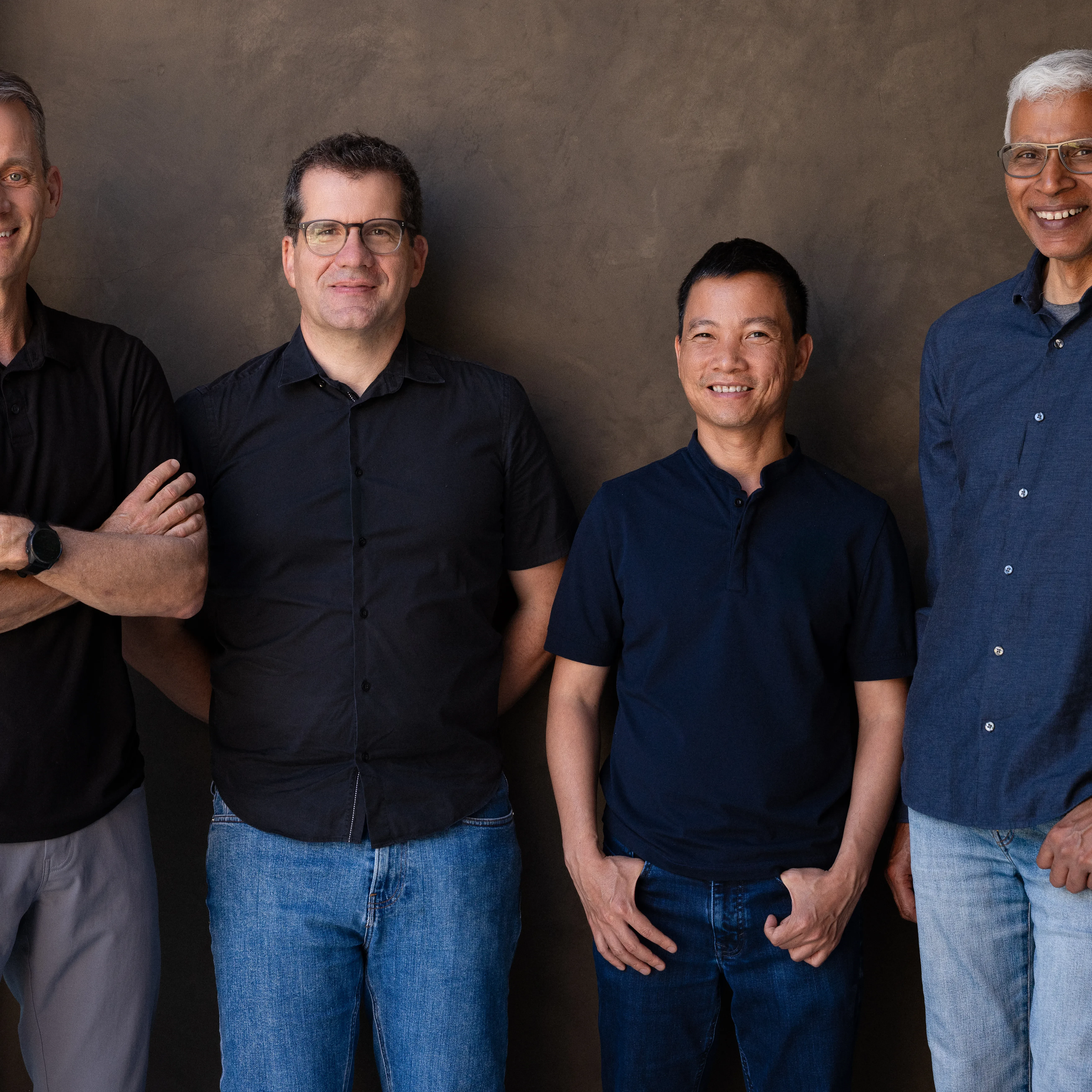
Top Google AI Leaders Including Jeff Dean Exit to Launch Discovery Loop, a New Startup Betting AI Can Be the Researcher
On July 25, Google’s legendary engineer Jeff Dean addressed 6,000 aspiring founders at Y Combinator’s Startup School, held at San Francisco’s Chase Center. Dean holds multiple core leadership roles at the search giant: he is co-founder of Google Brain, chief scientist for Google DeepMind and Google Research, and technical co-lead for Google’s flagship AI model Gemini. Alongside his long-time collaborator Sanjay Ghemawat, he has built many of the foundational components of Google’s computing and search infrastructure.
The tech community has long circulated a popular meme of surreal "facts" about Dean’s unmatched technical skill: for example, Jeff Dean’s resume only lists the things he hasn’t done—it’s much shorter that way.
At Chase Center, when the interviewer asked Dean which problems startup founders should prioritize tackling, Dean answered that the most important step is to pick a problem you are genuinely excited about that will also deliver real value to the world. He then shared his own core area of interest: a fully automated iteration of the scientific method.
“You propose an experiment, you build what you need to run it, evaluate the test, and then draw conclusions from the results,” he said. “Running thousands of these automated loops could unlock groundbreaking advances across multiple domains, from science and biology to chip design, and even building better AI models.”
What the crowd did not know that day was that Dean was already referencing his own secret, newly organized startup. Today, the news is official: after nearly 27 years at Google, Dean is leaving the company, alongside Ghemawat and two other top-tier AI scientists, to launch a new firm called Discovery Loop.
While Google will take a minority stake in the new startup, the departure is a devastating blow to the search giant as it fights to keep pace in the frenzied global AI race. Losing Dean and Ghemawat, two of Google’s earliest employees, is already seismic—it is equivalent to Mick Jagger and Keith Richards leaving the Rolling Stones to start a new band. The damage goes further: the other co-founders are also star leaders in the global AI ecosystem: Oriol Vinyals, DeepMind’s VP of research and a Gemini technical lead, and Quoc Le, Google Brain co-founder and the key researcher behind Google’s AutoML-Zero, a project that uses machine learning to autonomously build AI systems.
In a pre-launch interview with the four co-founders, Dean shared that the idea for the company only came together a few weeks prior. All three others quickly joined the project; the group are not just decades-long colleagues, but close friends who vacation together.
“We were working on separate projects, but we all started seeing the same huge potential for AI to automate full scientific and engineering development cycles,” Dean said.
The team built a roadmap where Discovery Loop would act as its own first customer. The autonomous experimental loops they build will first be used to improve the startup’s own advanced machine learning algorithms. The upgraded software will then become the core of an AI system that can tackle problems in other domains.
“I’m very excited about automating machine learning,” said Le. “We might even discover an entirely new transformer architecture that outperforms what we use today.”
From there, Discovery Loop plans to pursue transformative advances across a range of fields, including chip design, biology, drug discovery, and materials science.
“As we build the core intelligence and foundational Discovery Loop infrastructure, we’ll be able to quickly generalize to other domains,” said Vinyals. “One of our key priorities is building models that can come up with new ideas to test—that’s something current AI isn’t very good at right now.”
Initially, the team plans to co-develop new ideas with human researchers, but their long-term goal is to fully automate the entire discovery process. If they succeed, they argue that small, focused teams could use Discovery Loop to out-innovate the world’s largest research organizations, who would presumably become customers of the platform. The startup also may run its own internal discovery projects to pursue and monetize breakthroughs.
The team put together a simple pitch deck, structured the company as a public benefit corporation, and began reaching out to venture capitalists for funding.
“We just made a few slides with our backgrounds and a rough outline of why we think our approach will work across multiple areas,” said Dean, noting they did not use AI to build the deck.
The team’s reputation spoke far louder than any pitch deck, however.
“With this team, I wouldn’t need to know what they were doing before I backed them,” said venture capitalist Vinod Khosla, who met the group at his Sand Hill Road office on a Saturday to avoid leaking news of Google’s coming loss. “This is the ultimate superstar team.”
Khosla also praised the core idea: “Humans have been using AI as a tool to do research, not using AI to be the researcher. The fundamental shift at Discovery Loop is that AI is the researcher here.”
Other investor meetings were held at Dean’s home to keep the project secret. Ultimately Khosla Ventures and AI-focused venture firm Radical Ventures led the funding round, alongside a small group of other firms. The founders have not disclosed the total funding amount or valuation, but context makes clear the round is sizable: today, startups often pay tens or even hundreds of millions of dollars to hire a single top AI researcher, and these four are widely considered the greatest in the field.
“Building something to solve all these big problems is a powerful idea,” said Radical managing partner Jordan Jacobs, who will join Discovery Loop’s board. “These people have been pioneering this work for decades, so they know exactly what they’re doing.”
Negotiating the exit from Google was far more complex. Dean says Alphabet CEO Sundar Pichai held multiple meetings to convince the team to stay. Ultimately, the group decided they wanted the flexibility and excitement of building an independent startup.
“In a large organization, there is always a lot of inertia you have to overcome to make any radical changes,” said Vinyals. “We want to build something different.”
Google ultimately gave the team its blessing, alongside an investment and an agreement to provide cloud computing power for the startup’s first year.
“Over 27 years, Jeff and Sanjay helped to drive some of the most significant technology transitions, from our early search infrastructure to the neural networks that helped create the modern AI era,” Pichai said in a statement. “We’ll continue to work with Discovery Loop as a founding investor and Cloud partner, and collaborate on a research framework for ML systems and related infrastructure advances.”
Given the massive impact this small exodus of top talent will have on Google, Dean and his co-founders have gone to great lengths to keep the project stealth. To date, they have not yet begun hiring a full team (a step that could trigger even more departures from Google) or even leased office space. When asked who would serve as CEO, there was a brief pause.
“I think I’m the CEO,” said Dean, sheepishly. “Everyone pointed at me.”
Discovery Loop’s mission is not new. Nearly every major leader in AI—from Sam Altman to Dario Amodei to Jensen Huang—has argued at some point that AI will become an engine of scientific discovery, solving problems humans could never crack on their own. This team is betting that their decades of hands-on expertise will let them build a system that actually delivers on that promise.
Even if they fall short of that grand goal, Discovery Loop faces a simpler test of success: Will the work they build as an independent startup be as significant as the talent gap their departure leaves at Google?
Top Google AI Leaders Including Jeff Dean Exit to Launch Discovery Loop, a New Startup Betting AI Can Be the Researcher