New Brazen Heists Target AI Data Center Hardware, Spooking the US Freight Industry
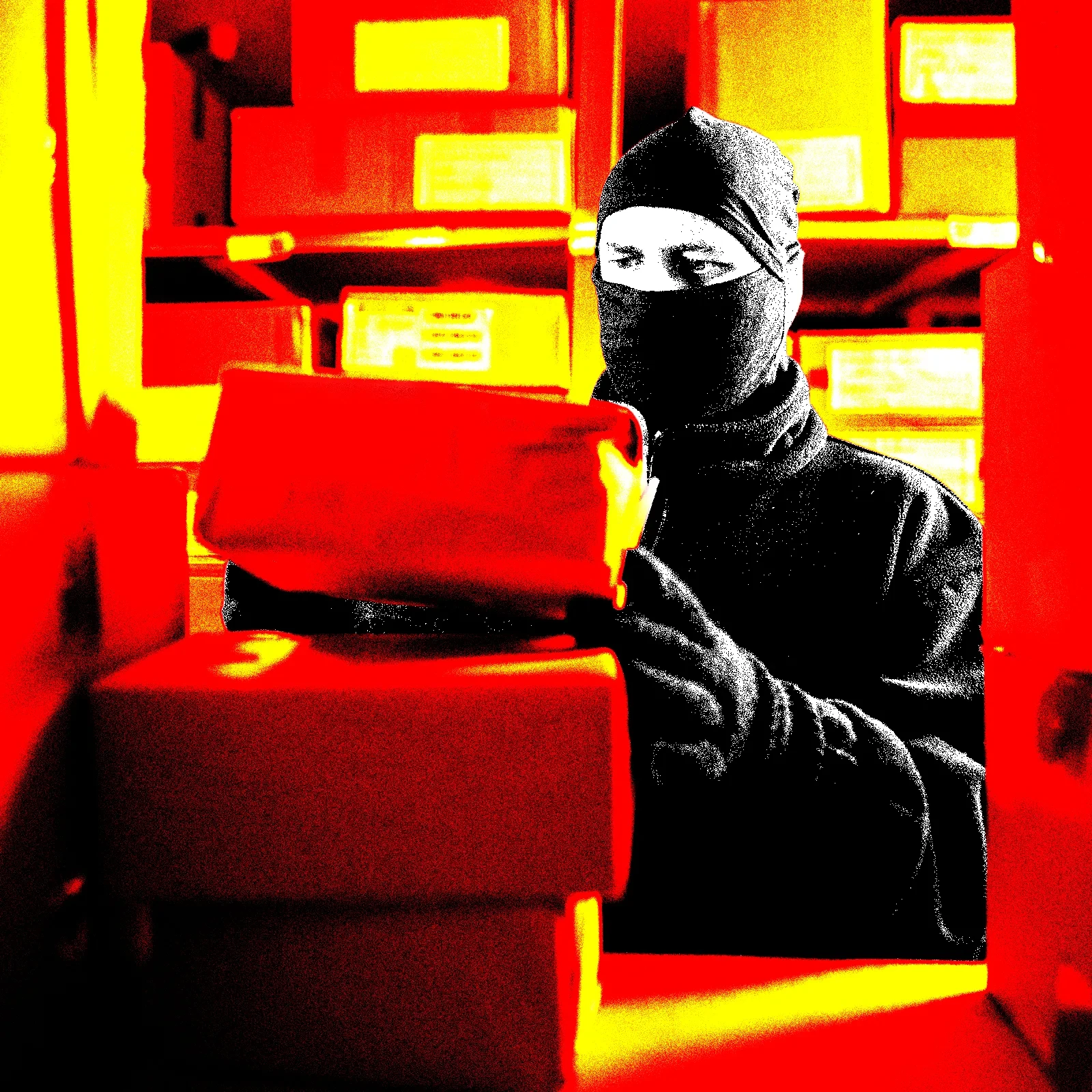
After 25 years investigating cargo theft from semi-trucks, Gerardo Pachuca says he has never encountered criminal activity as bold as what he has recently documented. The consultant, a former Los Angeles sheriff’s detective, says brazen robbers have twice used a dangerous new confrontational tactic in recent months to steal high-priced hardware bound for AI data centers, leaving the entire freight industry on high alert.
Pachuca, who obtained details of the thefts from law enforcement officials, says the two separate heists targeted high-value technology shipments traveling from Silicon Valley to Southern California. Both trucks were accompanied by private security professionals in unmarked escort vehicles, deployed specifically to guarantee the cargo reached its destination safely. On one trip, hours into the journey, another driver hit the escort car from behind in a deliberate hit-and-run, forcing the security vehicle to pull off the road. In the second incident, attackers used a PIT maneuver — a tactic designed to spin a car out of control — to force the escort to stop, then fled the scene. Pachuca says everyone familiar with these so-called accidents agrees the security vehicles were intentionally disabled to separate them from the cargo they were protecting.
Once the semi-trucks lost their escorts, the drivers continued moving without stopping — but never arrived at their planned destinations. Pachuca says neither the drivers nor the millions of dollars worth of missing data center gear have been traced to date.
WIRED attempted to independently verify Pachuca’s account with five state and local law enforcement agencies, but was unable to do so; Pachuca shared only limited details to avoid compromising what he describes as active ongoing investigations. However, two other freight industry professionals have corroborated key details of the incidents. J.J. Coughlin, chairman of the Southwest Transportation Security Council, a nonprofit intelligence-sharing group, says one of the affected escort companies notified him immediately after its vehicle was attacked while guarding “high-value technology.” Danny Ramon, director of intelligence and response at freight-monitoring software developer Overhaul, says he learned of the hit-and-run attack from law enforcement sources days after it occurred, calling the event a “coordinated assault” targeting a shipment of AI hardware.
Pachuca, Coughlin, and Ramon all confirm no one was hurt in either attack, and all three suspect the truck drivers were complicit in the scheme — an increasingly common issue in cargo crime. No perpetrators have been caught to date, and the group warns these isolated incidents could quickly spiral into an alarming new trend: a more violent iteration of freight crime, enabled by cyber scams and hacks, that specifically targets the equipment powering the cutting edge of the internet. “It’s the worst I’ve seen for cargo theft nationwide,” Pachuca says. “The methods they are using, the value they are getting, the frequency these crimes are occurring — nothing compares.”
Escort companies are the final line of defense for high-value cargo, and demand for their services is surging. Michael Duffy, CEO of Solutions Group International, says his escort business used to only see peak demand ahead of the holiday shopping season, but now work is steady year-round. Companies shipping liquid cooling parts, servers, and computer chips have become his biggest client group. “Now that the values have shot through the roof, we’re getting called all the time,” Duffy says. He estimates his company has protected 13,000 shipments over the past four years, without a single loss.
High-value cargo and their escort vehicles have been targeted by criminal groups in Mexico and other countries for years. The suspected new attacks in the U.S. have now pushed escort operators to upgrade their security protocols, with many encouraging staff to call 911 at the first sign of suspicious activity. “We’ve been trying to come up with a new game plan,” says Rachel Fruchtenicht of Shadow Freight Security.
| Got a Tip? |
|---|
| Do you work in the freight or tech industry and want to talk about what's happening? We'd like to hear from you. Using a nonwork phone or computer, contact the reporters securely on Signal at
peard33.24andaarianm.30|The Growing Trend of AI Cargo Theft
Cargo theft has risen steadily since the start of the Covid pandemic, when widespread shifts to e-commerce and delivery for daily needs expanded opportunities for criminal activity. More recently, the booming AI data center industry has created an especially lucrative new target for thieves: total spending on new data center construction in just the first half of this year has already surpassed total spending for all of 2025.
New data released this month by Verisk CargoNet, an analytics and risk assessment firm, shows that while the total number of reported cargo thefts fell 26% year-over-year last quarter, the total value of stolen goods more than doubled. That shift reflects a growing trend: criminals are increasingly prioritizing high-value cargo over lower-cost shipments. Verisk CargoNet lists metals (especially copper) and enterprise-grade computer and networking equipment among the most frequently stolen goods. The firm notes that these high-value shipments often follow the same standard transportation protocols as lower-value cargo, creating “a significant mismatch between their financial value and their ordinary transportation and security profile.”
For example, WIRED obtained a private investigator notice shared with freight industry partners that details an April heist where thieves stole 34,560 optical transceiver cables and 96 network switch modules — all critical data center components — that were en route from Olive Branch, Mississippi, to Richardson, Texas.
Law enforcement has recovered stolen cargo in a handful of recent cases, however. In May, authorities in Southern California announced the seizure of $4 million worth of allegedly stolen cargo, including data center cooling equipment developed by Deepcool AI. One person was arrested in connection with the case, and Deepcool AI did not respond to a request for comment. In June, California Highway Patrol received a tip from a prospective buyer who believed a deal was “too good to be true,” Sergeant Omar Morales tells WIRED. He says CHP went on to recover more than $2.2 million in merchandise allegedly stolen in three separate incidents, including eight pallets of “server switches” manufactured by Celestica for Meta, valued at $550,000 total. Meta declined to comment, and Celestica did not respond to requests for comment; Morales says the investigation remains ongoing. The same day CHP recovered the Meta shipment, authorities in the Chicago area discovered a reportedly stolen trailer filled with about $1 million in equipment bound for data centers.
From Digital Scams to Physical Assault
For the most part, modern cargo heists avoid the dramatic forced entry, lock-cutting, or aggressive tactics seen in the recent escort attacks. Instead, thieves exploit the fragmented, often impersonal nature of the freight industry, where hundreds of thousands of independent truck owner-operators sign up to haul loads posted online.
Criminals commonly use social engineering or phishing to hack into a legitimate truck operator's email address, allowing them to essentially take over the business and book shipments using the company’s valid motor vehicle registrations. GPS trackers on stolen trucks can then be spoofed or deactivated, leaving no trace of the cargo. In another common version of the scam, legitimate trucking business owners illegally sell off their motor carrier numbers — the unique identifiers assigned to trucking companies by federal regulators — letting fraudsters operate as a real, long-standing business with a valid permit, phone number, and email address.
Pachuca says both of the recent thefts that targeted escort vehicles involved recently sold motor carrier numbers. Morales adds that the stolen Meta data center switches seized in California were stolen using an identical technique: thieves posed as a real trucking company and forged the legitimate carrier’s documents. “These are very sophisticated, very organized criminal organizations,” says Ben Wilkens, director of cybersecurity at the National Motor Freight Traffic Association, a trade organization.
A new federal system called MOTUS is designed to crack down on this kind of impersonation and fraud by making it easier for trucking companies to manage their federal registrations, and for shippers to confirm a carrier’s legitimacy. Regulators released a bulletin in March reminding the industry that registration numbers can only be sold as part of full corporate transactions, and all such sales must be reported.
Jaclyn Giles, director of operational support at Georgia-based shipper FLS Transportation Services, says her team detects a scammer attempting to steal one of its loads every single day. Employee training and a paid monitoring service have helped FLS fend off most fraudulent carriers, but Giles says roughly once a month “our employees get sloppy,” and a thief makes off with cargo. Most recently, FLS lost $650,000 worth of tools to theft, Giles says. Last year, the company was forced to change insurers over concerns about insufficient coverage for stolen loads.
Wilkens says many carriers do not report thefts partly out of fear that their insurance costs will skyrocket. Others are buying supplemental insurance or splitting high-value loads across many trailers to reduce potential losses. Giles says FLS now attaches GPS trackers directly to high-value shipments such as LEGO toys. Pachuca says one of his California freight clients, which moves large volumes of tech gear, installed Flock license-plate cameras and discovered would-be thieves casing their location to identify trailers holding the highest-value products. Another client has begun catching fake driver’s licenses by scanning them directly. In June, WIRED reported that Tesla tightened driver identity checks after trailers holding millions of dollars in batteries were stolen right from its loading docks.
Authorities have not publicly disclosed much information about where stolen AI hardware typically ends up. U.S. export controls on chips and other high-value tech have created strong incentives to steal and smuggle the goods to countries like China. Based on location pings captured when some stolen parts are activated, Pachuca and other freight industry experts suspect many stolen shipments are ultimately transported overseas.
Preventing these crimes has been complicated by decades of deregulation and patchwork enforcement across states. “Reporting structures and standards vary from one state to another, and the prosecution rates are low enough that this is a very high-reward, low-risk crime,” Wilkens says. “It’s easy money.”
New Brazen Heists Target AI Data Center Hardware, Spooking the US Freight Industry