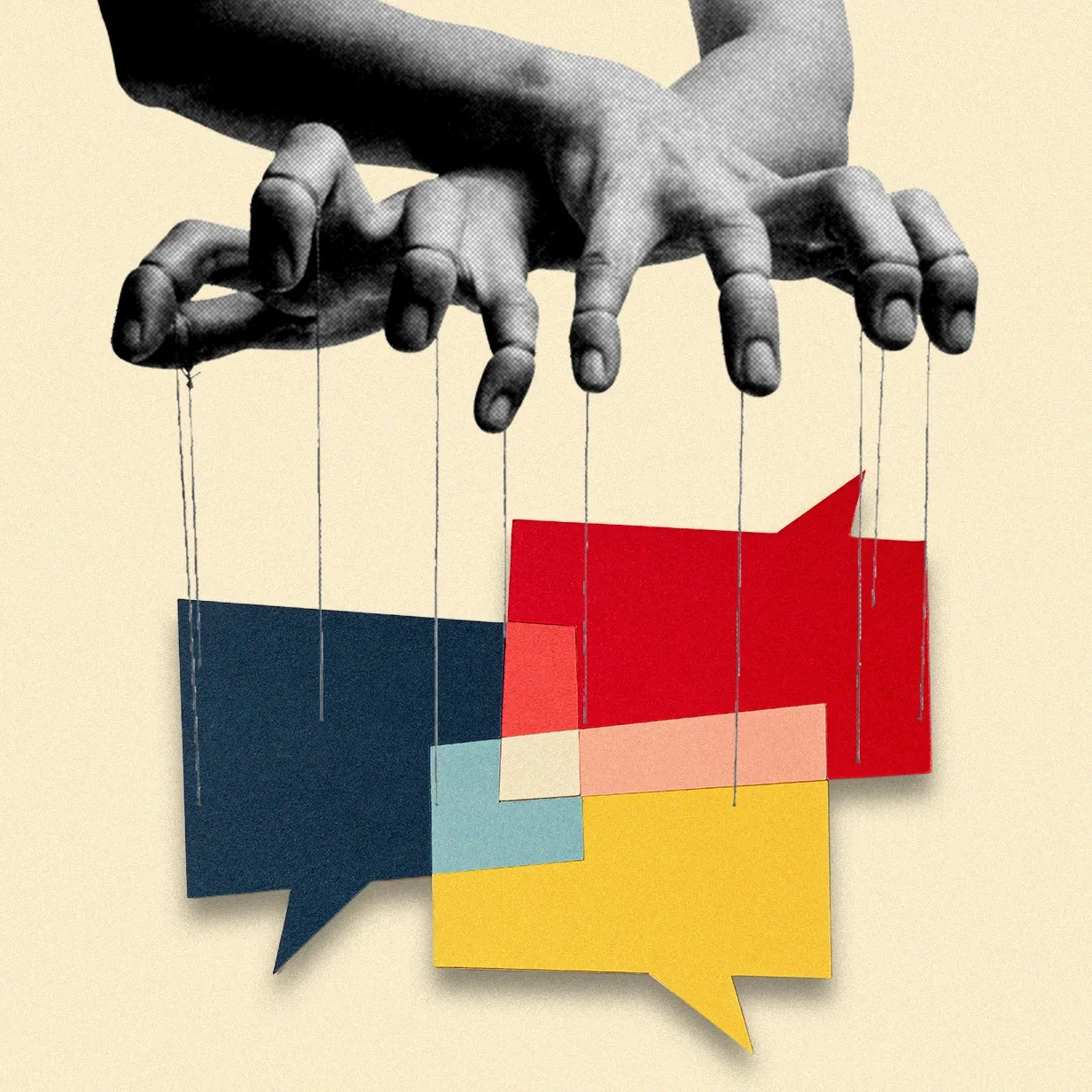
The Viral Chat Platform Where "AI" Stands For "Average Individual"
What if you skipped typing your next random question into Claude or ChatGPT, and asked an ordinary person instead? That is the entire premise of ChatTJB, a viral art project created by 32-year-old Tucker Bryant — a public speaker, artist, and former project manager at Google.
A playful billboard in downtown San Francisco brands ChatTJB as “the leading chat interface powered by AI.” The iconic twist? For this project, “AI” does not stand for artificial intelligence — it stands for “average individual.” Unlike every other mainstream chat tool, Bryant never trained a large language model to mimic his voice or writing style. He answers every single user prompt manually, himself.
Request a custom drawing of a skunk wearing sunglasses, and he will scribble one up for you. Ask for tips on how to fry an egg, and he will share his go-to advice… maybe. When WIRED tested the service by asking how to become a consistent morning person, the outlet had not yet received a reply at the time of writing, a delay the site attributes to thousands of incoming requests currently waiting in the queue.
Bryant first launched ChatTJB back in April, but it did not gain widespread traction until July 27, when his $6,000 San Francisco billboard went live. Media coverage quickly followed, and by August 6, Bryant reports ChatTJB had received more than 30,000 total queries. At its peak, he was processing roughly 5,000 new prompts every single hour.
For Bryant, ChatTJB is first and foremost an art project, not just a viral gimmick or casual social experiment. “It was sort of an opportunity for me to provide a little bit of commentary on a strange moment that I feel like we're in,” he explained to WIRED.
Far from being anti-AI, Bryant actually built the ChatTJB website himself using the AI tool Lovable for vibe-coding — but he is openly honest about the quiet risks the technology poses. His biggest concern is what he calls “cognitive surrender”: the growing trend of people accepting AI outputs with little to no critical thinking or personal scrutiny.
The concept clicked for him after reflecting on his own habits with large language models. He recalled one absurd moment where he asked an LLM whether he should wear short or long sleeves on a 65-degree day in San Francisco — a city he has called home for seven years. “And then I'm like, dude, I've been living in this city for whatever, like seven years,” he said. “Like, I know how to handle the weather. And yet, it felt like an easier thing for me to defer to a LLM for advice on that.” That small, silly moment made him question his own relationship with AI, and pushed him to launch ChatTJB: “It felt like something that I wanted to speak on, because I was like, what am I doing here?”
In the weeks since the project went viral, Bryant has hand-created all kinds of custom requests: a frog eating spaghetti, San Francisco mayor David Lurie reimagined as Godzilla, and two black cats eating grass on a kitchen table, to name just a few. The written questions he receives are just as varied, ranging from “my birthday is in two weeks and I don’t want a party — what should I do instead?” to suggestions for dinner using only the ingredients already sitting in someone’s fridge.
“A lot of people initially were interacting with this thing as a joke or as a funny thing,” Bryant said. “And then I think when they realized that they could chat and get actual conversation, some of what people would share would be more personal, sincere, genuine, et cetera.”
Bryant is quick to downplay his own skills: he is not a professional artist, and his advice is no more useful than what you would get from any random stranger you stopped on the street. He even dubs ChatTJB “the worst LLM of all time” in his YouTube content. But he says users do not care about perfection. “The way I'm interpreting it is that the value for them is just getting a human to bounce those questions off of, as opposed to getting super expert advice,” he said. “It's very tender to see.”
When Bryant first started the project, he expected it to wrap up after just a couple of days. But after seeing how much enthusiasm people have for the concept, he plans to keep it running long-term. He has brought on 10 volunteer helpers to answer requests, selected from more than 3,000 people who applied to join the team.
For dedicated fans, Bryant offers ChatTJB Pro, a $5-per-month tier to financially support the project. He is completely transparent on the site: “this is a worthless tier,” and supporters get no actual perks beyond the knowledge they are backing independent art. So far, only four people have signed up for the tier, meaning he has not come close to recouping the $6,000 cost of his billboard — which will stay up through late August.
But making money was never the goal, Bryant says. “I really just want people to have an opportunity to take a second look at both their own relationship to technology as well as the world's relationship to technology,” he explained.
At a moment when consumers are bombarded by companies selling “world-changing” AI, alongside endless frightening coverage of a looming AI bubble, Bryant just wanted to add some much-needed levity to the conversation. “I hope that that just makes a weird time sit a little bit lighter,” he said, “because I think sometimes that's the best that we can do.”
The Viral Chat Platform Where "AI" Stands For "Average Individual"